






With thousands of slot games available, choosing what to play isn’t always as simple as it sounds.
You’ve got everything from classic titles like Starburst and Book of Dead to newer releases like Big Bass Bonanza, Gates of Olympus and Sweet Bonanza. On the surface, they all look different, but the real differences sit underneath.
That’s where most players get stuck.
It’s easy to pick a game based on how it looks. It’s much harder to know whether it’s actually the right type of slot for you.
In this guide, we’ll break down:
✔️ what actually matters when choosing a slot
✔️ how different games behave in practice
✔️ and how to spot the differences before you start playing
🎰 Quick Tip
Two slots can look completely different but behave very similarly. What matters is how they pay, not just how they look.
Understanding that makes choosing a game much easier.
What actually matters when choosing a slot?
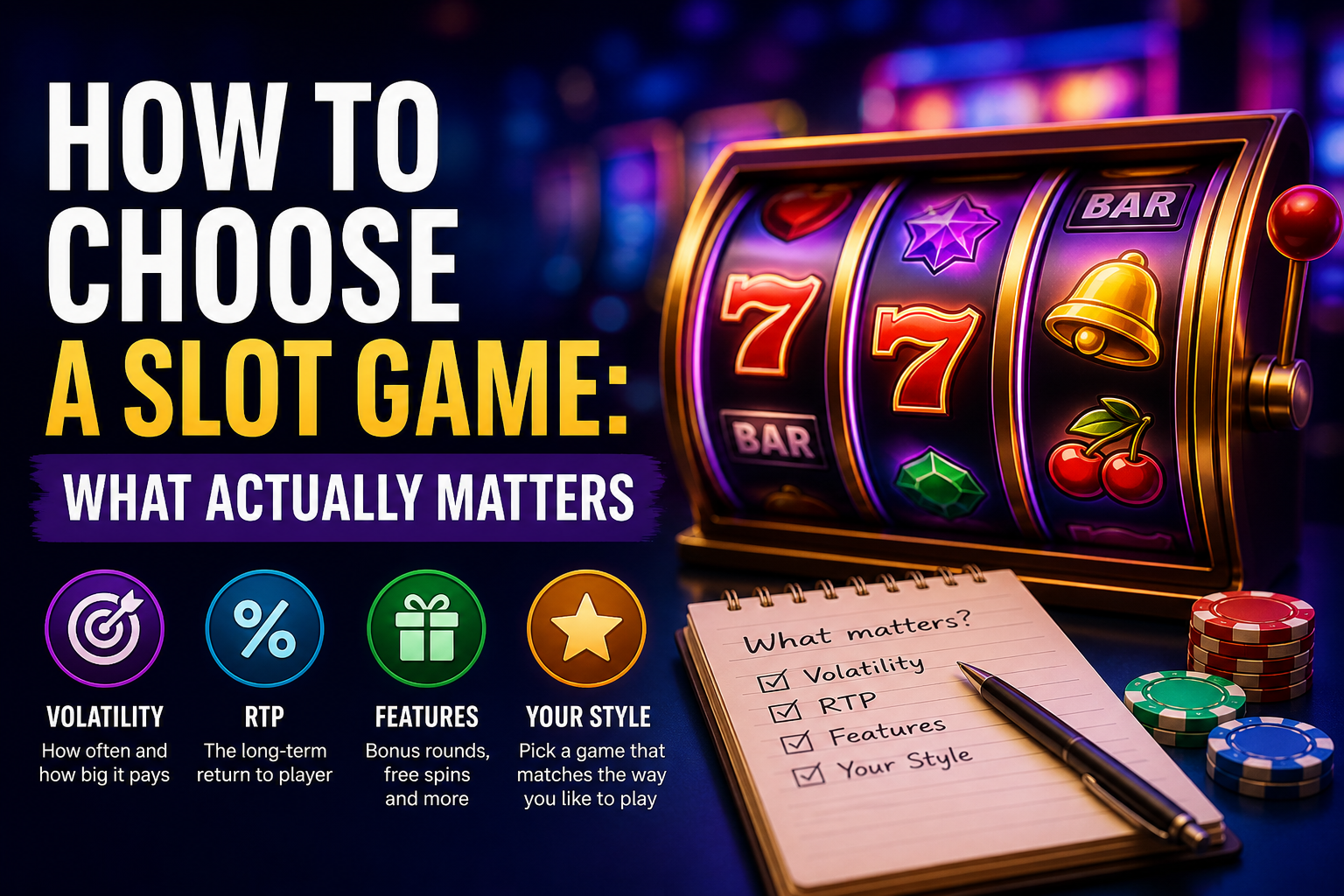
When it comes to picking a slot, there are a few factors that make a much bigger difference than theme or branding.
The main ones are:
✔️ how often the game pays
✔️ how big those payouts can be
✔️ and how the features work
Different games handle these in very different ways.
For example, Starburst is a low volatility slot. It tends to pay small amounts regularly and is easy to follow. On the other hand, Dead or Alive 2 is much more volatile, with longer quiet periods but the potential for much larger wins.
Then you’ve got games like Big Bass Bonanza, which sit somewhere in the middle. They rely heavily on bonus rounds, where most of the value comes from free spins rather than the base game.
These differences matter far more than whether a game has fish, fruit symbols or ancient gods on the reels. We’ve seen this clearly when comparing how different popular slots behave in real play.
Low volatility vs high volatility: which is right for you?
One of the biggest differences between slot games is volatility.
It sounds technical, but it really just comes down to how a game pays.
Some slots are designed to pay smaller amounts more often. Others go quiet for longer, then pay bigger amounts less frequently.
Low volatility slots
Low volatility slots are the steadier option.
Games like Starburst (NetEnt) or Twin Spin (NetEnt) tend to give regular small wins. They feel active, easy to follow, and don’t swing too wildly in either direction.
That’s why they’re often used for free spins offers. They’re predictable, simple, and easy to understand.
High volatility slots
High volatility slots are a completely different experience.
Games like Dead or Alive 2 (NetEnt) or Gates of Olympus (Pragmatic Play) can go long stretches without much happening, but when they do pay, the wins can be much larger.
These games tend to feel more unpredictable. Some sessions can be quiet, others can change quickly if a bonus round hits.
Medium volatility slots
Then you’ve got medium volatility slots, which sit somewhere in between.
Big Bass Bonanza (Pragmatic Play) is a good example. The base game is fairly steady, but most of the value comes from the free spins feature. It’s a mix of regular play with the chance of a bigger moment.
The key thing is that none of these are better or worse. They just suit different types of play.
Some players prefer steady, frequent results. Others are happy to wait for bigger swings.
💡 Simple Way to Think About It
Low volatility = more frequent, smaller wins.
High volatility = less frequent wins, but bigger potential payouts.
RTP: does it actually matter when choosing a slot?
RTP is one of the first things players look for when choosing a slot. If you’re not sure how it works, it’s worth understanding what RTP actually means in slots.
In simple terms, RTP shows the percentage a game is designed to return over a very large number of spins. A slot with 96% RTP is built to return £96 for every £100 wagered over time.
That sounds useful, and it is, but only to a point.
👉 The key thing to understand is that RTP doesn’t tell you how a slot will behave in your session.
Two games can have very similar RTP figures and feel completely different to play.
NetEnt Starburst Vs Pragmatic Play Gates of Olympus
For example, Starburst (NetEnt) and Gates of Olympus (Pragmatic Play) both sit in a similar RTP range depending on the version you’re playing. But the experience couldn’t be more different.
Starburst pays small amounts regularly. Gates of Olympus can go quiet for longer and then pay more during bonus rounds.
That’s why players often feel like RTP doesn’t match what they’re experiencing. It’s not that the number is wrong. It’s that it doesn’t reflect how the game behaves in the short term.
This also links to how wins are presented.
Some slots return lots of small amounts, which can make it feel like you’re winning more often than you are. We’ve looked at this in more detail when explaining why slot wins can feel misleading.
So, does RTP matter?
Yes, but it shouldn’t be the only thing you look at.
It’s best used as a rough guide, not a guarantee of how a game will feel.
⚖️ RTP vs Reality
RTP shows how a slot behaves over time, not how it will feel in a single session.
That’s why two games with similar RTP can still play very differently.
Slot features: what actually makes a game worth playing?
Beyond RTP and volatility, a lot of what makes a slot enjoyable comes down to its features.
This is the part players usually notice first, but it’s worth understanding what those features actually do.
What are features?
One of the most common features is free spins.
Games like Big Bass Bonanza (Pragmatic Play) and Book of Dead (Play’n GO) rely heavily on their bonus rounds. The base game can feel fairly steady, but most of the bigger moments happen once free spins are triggered.
That’s why these games are often used in promotions. The feature is easy to understand and gives players a clear target.
Then you’ve got multiplier-based games.
Gates of Olympus (Pragmatic Play) and Sweet Bonanza (Pragmatic Play) are good examples. Instead of relying on traditional paylines, they use cluster or “pay anywhere” systems, with multipliers that can stack during a spin.
These games can feel more dynamic, but also more unpredictable. A single spin can change quickly if multipliers land.
Another popular format is Megaways slots.
Games like Bonanza Megaways (Big Time Gaming) use changing reel layouts, meaning the number of ways to win shifts on every spin. This creates more variety, but also more volatility.
There are also simpler feature sets, which still appeal to a lot of players.
Starburst (NetEnt), for example, has expanding wilds and re-spins, but no complex bonus rounds. That simplicity is a big part of its appeal.
The important thing is that features don’t just make a game more interesting. They shape how it plays.
A game built around bonus rounds will feel very different from one that pays steadily in the base game. A multiplier-heavy slot will behave differently from a simple line-based game.
💡 What to Look For
If you enjoy chasing bonus rounds, look for games built around free spins features.
If you prefer steady gameplay, simpler slots with regular payouts may suit you better.
Does the theme of a slot actually matter?
It’s one of the first things players notice, but it’s usually one of the least important factors.
A slot might look completely different on the surface, but behave almost identically underneath.
Theme grabs attention, not performance
Bright colours, big characters, and familiar concepts are designed to pull you in.
That’s why you’ll see:
➡️ Egyptian-themed slots
➡️ fishing games like Big Bass
➡️ mythology games like Gates of Olympus
➡️ classic fruit machines
They all look different, but the theme doesn’t control how often the game pays or how volatile it is.
Different themes, same mechanics
Take Sweet Bonanza (Pragmatic Play) and Gates of Olympus (Pragmatic Play).
One is all sweets and candy. The other is based on Greek mythology. But both use:
➡️ cluster-style payouts
➡️ multipliers
➡️ bonus rounds as the main source of bigger wins
So while they feel different visually, they’re actually quite similar in how they play.
Why casinos and providers focus on theme
Themes are mainly about marketing.
They help:
✔️ make games recognisable
✔️ give casinos something to promote
✔️ keep content feeling fresh
That’s why you’ll see lots of similar mechanics reused across different themes.
What you should focus on instead
The theme is fine as a starting point, especially if it helps you enjoy the game.
But if you want to choose a slot that suits how you like to play, it’s better to focus on:
✔️ volatility
✔️ features
✔️ how the game actually pays
Those are the things that make a real difference once you start spinning.
⚖️ Quick Reality Check
A slots theme tells you what it looks like, not how it plays.
Two completely different-looking games can behave almost identically once you start playing.
How to choose the right slot for you
Once you strip everything back, choosing a slot is really about matching the game to how you want to play.
There’s no single “best” slot. It depends on what kind of experience you’re looking for.
If you want steady, simple gameplay
Go for lower volatility slots with straightforward features.
Games like Rainbow Riches (Barcrest) or Blood Suckers (NetEnt) are easy to follow, with regular small wins and simple mechanics.
These tend to feel more consistent and are a good starting point if you don’t want anything too unpredictable.
If you prefer chasing bonus rounds
Look for games where most of the action happens during free spins.
Fishin’ Frenzy (Blueprint Gaming) and Legacy of Dead (Play’n GO) are good examples. The base game can feel fairly quiet, but the bonus feature is where things get interesting.
These are popular because they give you something clear to aim for.
If you like bigger swings and higher potential
Higher volatility games are where you’ll find that.
Slots like Wanted Dead or a Wild (Hacksaw Gaming) or Money Train 3 (Relax Gaming) can go long stretches without much happening, but have the potential for bigger hits when features land.
They feel less predictable, but that’s part of the appeal.
If you’re not sure where to start
Keep it simple.
Pick a game with:
👉 clear features
👉 a style you recognise
👉 and a structure you understand
Then see how it feels over a few sessions.
That will tell you far more than any stat or label.
✔️ Simple Takeaway
Don’t choose a slot based on how it looks. Choose it based on how it plays.
Once you understand volatility, features and RTP, picking the right game becomes much easier.
How to Choose a Slot Game FAQ
How do I choose the best slot game?
Focus on how the game plays rather than how it looks. Check the volatility, features, and overall style of the slot to see if it matches how you want to play.
Is RTP the most important factor when choosing a slot?
RTP is useful, but it’s not everything. It shows long-term averages, not how a slot will behave in your session. Volatility and features often matter more in practice.
Are some slot games easier to win than others?
No slot guarantees wins. Some games pay smaller amounts more often, while others pay less frequently but with bigger potential wins. It depends on the design of the game.
Should I choose a slot based on its theme?
Theme can make a game more enjoyable, but it doesn’t affect how it pays. Two slots with completely different themes can behave very similarly.
What type of slot is best for beginners?
Simpler, lower volatility slots with clear features are usually easier to understand. These games tend to have more consistent gameplay and fewer complex mechanics.