








New gambling rules are coming into force in the UK later this month, and they will affect how licensed gambling sites offer bonuses and promotions to players.
From 19 January 2026, the Gambling Commission will introduce changes to make gambling offers clearer and reduce the risk of harm. The focus is on simplifying promotions, limiting how bonuses can be structured, and ensuring players better understand what they are signing up for.
These rules apply to UK-licensed online gambling operators, including sports betting sites, online casinos and other remote gambling platforms. They do not apply to illegal gambling sites, which operate outside UK regulation.
At a glance, the changes are about:
☑️ restricting certain types of promotions
☑️ placing limits on bonus wagering requirements
☑️ making promotional terms easier to understand
While the intention is to improve transparency and consumer protection, the changes arrive at a time when the regulated gambling market is already under pressure from rising costs and tighter controls.
Understanding what is changing and how it affects everyday players is key to seeing why these new rules matter.
When Do the New Gambling Rules Start?
The new UK gambling rules will come into effect on 19 January 2026.
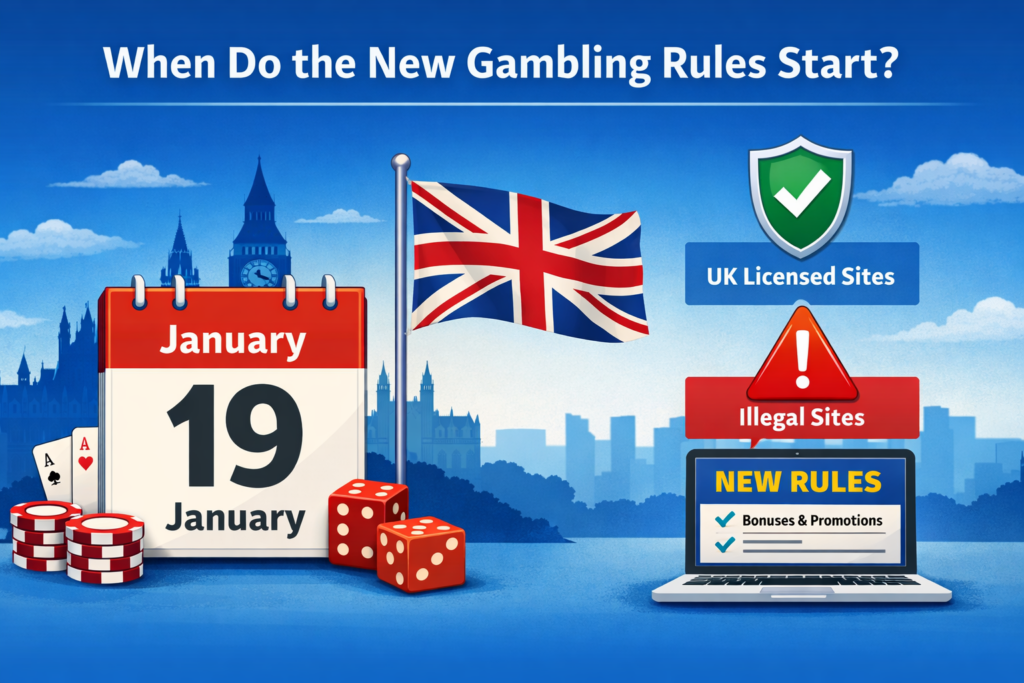
From that date, all UK-licensed gambling operators will be required to follow the updated rules on bonuses and promotions. This applies to online casinos, sports betting sites and other remote gambling services regulated by the Gambling Commission.
Players do not need to take any action for the rules to apply. Any changes you notice to casino bonuses, promotions or offers after 19 January will be down to operators adjusting their products to comply with the new requirements.
It’s also worth noting that these rules only apply to licensed UK sites. Illegal gambling sites are not affected, which is why some critics argue the changes could unintentionally widen the gap between regulated and unregulated operators.
What Is a Cross-Product Promotion?
A cross-product promotion is basically a two-for-one style gambling offer.
It’s when a gambling site says you have to use one type of bet to unlock a reward on something else.
For example:
❌ Place a football bet and get free spins on a slot
❌ Bet on horse racing to unlock a casino bonus
❌ Use sports betting to earn rewards for casino games
From 19th January, UK-licensed gambling sites won’t be allowed to run these kinds of offers anymore.
The idea behind the change is simple. Regulators think these promotions can nudge people into gambling on things they didn’t actually plan to play. You might log in to place a bet on the football, then end up playing casino games just to use the bonus.
The aim of banning cross-product promotions is to keep things more straightforward. If you want to play slots, the bonus should be for slots. If you want to bet on sports, the offer should stay on sports.
You’ll still see bonuses on UK sites, but they’ll be linked to one product only, rather than encouraging you to jump between different types of gambling.
Why Are Cross-Product Promotions Being Banned?
In short, regulators think cross-product promotions can make it too easy to gamble more than you planned.
The concern is that these offers blur the lines between different types of gambling. You might log in just wanting to place a quick sports bet, but a promotion then nudges you towards casino games, slots or something else you weren’t really looking for.
Over time, regulators believe this kind of cross-over can:
⚠️ encourage people to gamble on products they don’t fully understand
⚠️ make it harder to keep track of spending
⚠️ increase the risk of gambling becoming more impulsive
From the regulator’s point of view, it’s not about banning bonuses altogether. It’s about keeping gambling more contained and predictable. If someone chooses to bet on sport, the rewards should stay within sport. If they choose to play casino games, any bonus should relate only to that.
The UK Gambling Commission also wants promotions to be easier to understand. Cross-product offers can be confusing, especially when different rules, wagering requirements and time limits apply across multiple products.
By removing these types of promotions, the aim is to make gambling offers simpler, clearer and easier for players to control.
What Does the 10x Bonus Wagering Cap Mean?
This new rule is about how many times you have to wager a bonus before you can withdraw any winnings.
UK gambling sites will no longer be allowed to set wagering requirements higher than 10 times the bonus amount.
So what does that actually mean?
Let’s say a site gives you a £20 bonus. Under the new rules, the most you could be asked to wager is £200 before you’re allowed to cash out anything linked to that bonus.
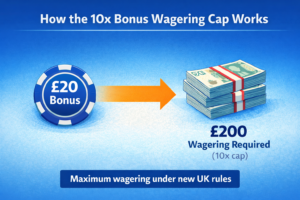
Example showing how a £20 gambling bonus must be wagered £200 under the new 10x bonus wagering cap in the UK.
Before this change, wagering requirements could be much higher. In some cases, players were required to wager bonuses 30, 40, or even 50 times, making withdrawals extremely difficult.
The idea behind the 10x cap is to stop bonuses that look good on the surface but are almost impossible to clear in reality.
For players, this should mean:
✔️ fewer unrealistic bonus conditions
✔️ less confusion about what’s required
✔️ a clearer idea of whether a bonus is actually worth using
It doesn’t mean bonuses will disappear, but it does mean they should be more straightforward and fairer than some of the offers seen in the past.
Are Gambling Bonuses Being Banned?
No, gambling bonuses are not being banned.
UK-licensed gambling sites will still be allowed to offer bonuses and promotions after the new rules come into force. What is changing is how those bonuses can work.
In practice, this means players will still see:
✔️ welcome bonuses
✔️ free spins
✔️ matched bets and similar offers
What’s likely to disappear are bonuses that:
❌ link multiple products together
❌ come with very high or confusing wagering requirements
❌ look generous at first glance but are hard to actually use
The focus of the new rules is on making bonuses simpler and easier to understand, rather than removing them altogether.
That said, some players may notice fewer promotions or smaller offers over time, as gambling sites adjust to tighter rules and higher costs. This doesn’t mean bonuses are gone, but they may feel less flashy than they used to.
For players who value clarity over complexity, that could be a positive change. For others, it may make regulated gambling sites feel more restrictive than before.
How Will This Affect the Average Player?
For most people, the changes won’t feel dramatic overnight, but you may start to notice small differences when using UK-licensed gambling sites.
Bonuses are likely to be:
✔️ simpler
✔️ easier to understand
✔️ less complicated to clear
At the same time, there may be fewer big headline offers than players are used to seeing. With tighter rules on promotions and higher costs for operators, gambling sites may become more cautious about how often and how generously they reward players.
For some players, this will be a good thing. Fewer confusing terms and unrealistic wagering requirements mean it’s easier to know where you stand before placing a bet or spinning a slot.
For others, especially those who enjoy bonuses and incentives, regulated sites may start to feel more restricted or less competitive than they did before.
The key point is that while the rules are designed to protect players, they also change the overall experience of gambling on licensed UK sites. How people react to that will vary, and that reaction matters when looking at the wider market.
Why Are People Linking These Changes to Illegal Gambling Sites?
The link comes down to one simple thing: illegal gambling sites don’t have to follow these rules.
UK-licensed gambling sites must comply with the new bonus restrictions, wagering caps and safer gambling measures. Illegal sites that operate outside UK regulation are not affected.
That means unlicensed operators can continue to:
➡️ offer larger bonuses
➡️ set much higher wagering requirements
➡️ run aggressive promotions
➡️ avoid affordability checks and other safeguards
As regulated sites become more restrictive, some players may be tempted by offers that appear more attractive on the surface, even if they carry significant risks.
The concern raised by critics isn’t that the new rules are wrong, but that they widen the gap between legal and illegal gambling. As licensed sites are tightened and taxed more heavily, illegal operators gain a competitive advantage without providing any consumer protection.
For most players, regulated sites will still be the safer choice. But history shows that when legal options feel less attractive or more limited, a small percentage of players will look elsewhere, often without fully understanding the risks involved.
This is why discussions about new gambling rules increasingly include warnings about the black market. Not because the changes are harmful by design, but because they arrive in an environment where illegal operators are already actively targeting UK players.
Is This All Happening at the Same Time as Gambling Tax Rises?
Yes, and that’s a big part of why these changes are getting so much attention.
The new gambling rules are coming into force shortly after the Chancellor’s Budget announced higher taxes for the gambling industry. While tax changes don’t directly affect players in obvious ways, they do affect how gambling sites operate behind the scenes.
When gambling taxes rise, licensed operators face higher costs. In many cases, those costs are absorbed by:
➡️ offering fewer promotions
➡️ reducing the value of bonuses
➡️ tightening odds or rewards
When this happens at the same time as stricter rules on promotions, the combined effect can be more noticeable for players than either change on its own.
Critics argue that while each measure may make sense individually, layering higher taxes and tighter regulations together risks putting too much pressure on the regulated market at once. That pressure matters because regulated sites are the ones that provide consumer protections, pay UK tax and support jobs and sport.
This is why industry warnings often focus on timing. The concern is not just what is changing, but how much is changing at the same time.
What’s the Bigger Issue With UK Gambling Rules Right Now?
At the heart of the debate is balance.
Most people agree that gambling should be properly regulated and that players need protection. Clearer bonuses, fairer terms and safer gambling tools are all positives. The challenge is making sure these protections work without pushing people outside the regulated system.
Regulation only protects players if they stay on licensed sites. If gambling becomes too restrictive or less appealing on regulated platforms, a small but important number of players may start looking elsewhere, including to illegal gambling sites that offer fewer limits but no safeguards.
The concern raised by critics is that UK gambling policy is becoming heavier on the regulated side, while the illegal market remains largely untouched. As rules tighten and costs rise, the gap between legal and illegal gambling can widen.
This doesn’t mean the new rules are wrong, but it does mean their impact needs to be watched carefully. Strong regulation and a healthy regulated market are meant to work together. If one weakens the other, the system stops doing what it’s meant to do.
What Happens Next?
As the new gambling rules come into force, attention will turn to how both players and gambling sites respond.
In the short term, players may notice changes to bonuses and promotions as UK-licensed operators adjust to the new requirements. Some offers may be simpler, others less generous, but the overall aim is to make gambling clearer and easier to understand.
In the longer term, regulators and policymakers will be watching to see whether these changes improve consumer protection without pushing players away from regulated sites. The real test will be whether the balance holds between safeguarding players and keeping legal gambling competitive enough to prevent activity drifting elsewhere.
For now, the key takeaway for players is simple: the rules are changing, but licensed UK sites remain the safest place to gamble. How well the system adapts to these changes will shape the future of UK gambling in the months ahead.
2026 UK Gambling Rules FAQ
When do the new UK gambling rules start?
The new UK gambling rules come into force on 19 January 2026, and apply to all UK-licensed online gambling sites, including casinos and betting platforms.
Are gambling bonuses being banned in the UK?
No, gambling bonuses are not being banned. UK-licensed sites can still offer bonuses, but the rules now limit how those bonuses can be structured.
What is the 10x bonus wagering cap?
The 10x wagering cap means a bonus cannot require players to wager more than ten times the bonus amount before withdrawing any winnings.
Why are gambling rules being changed now?
The UK Gambling Commission says the changes are designed to make gambling offers clearer, reduce confusion around bonuses and improve consumer protection.
Can players still gamble legally in the UK after the changes?
Yes. Gambling remains legal in the UK through licensed operators regulated by the Gambling Commission.