









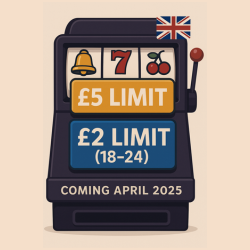
Heads up, slot fans – some major rule changes are about to hit the UK’s online casinos. From 9th April 2025, all UK-licensed gambling sites will have to enforce new maximum stake limits on reel-based slot games. And yes, it applies no matter where you play – so whether you’re spinning at PlayOJO, Dream Vegas, or your local favourite, the same limits will soon apply across the board.
This is part of a broader push from the UK Government to make online gambling safer, especially for younger adults. It’s the first time we’ve seen actual statutory limits for online slots, and it’s a big moment for the industry (and players too).
So what exactly is changing? Why now? And what does it mean for you?
Let’s break it all down.
What Are the New Slot Stake Limits?
The new rules are all about putting a cap on how much you can bet per spin on online reel-based slot games. And for the first time, your age actually matters when it comes to how much you’re allowed to stake.
Here’s how it’s going to work:
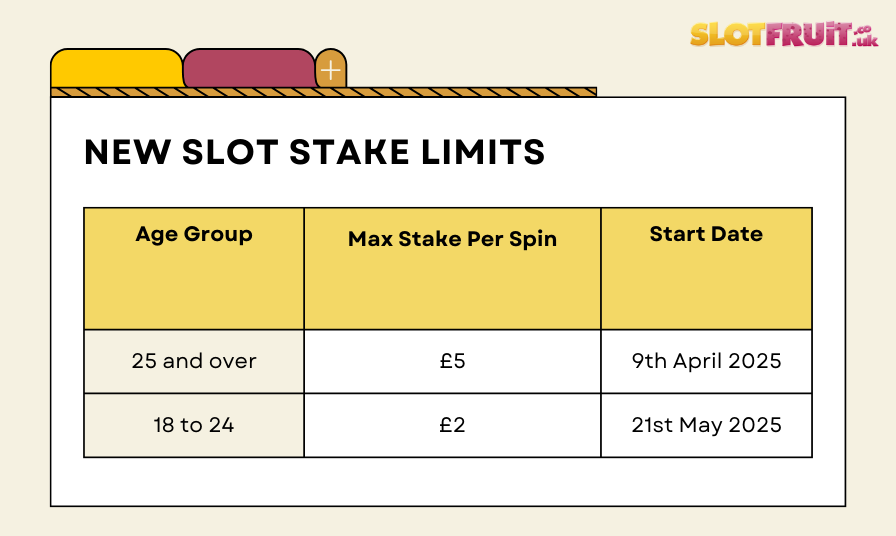
From 9th April, everyone will be limited to a maximum of £5 per spin. Then, from 21st May, if you’re aged 18 to 24, your limit drops to £2 per spin.
It doesn’t matter which UK licensed casino you play on – these limits are being rolled out across the board. So you won’t find higher bets anywhere else unless you’re willing to venture into the dodgy world of unlicensed sites (not recommended).
Quick note: What’s a “spin”?
Good question. In this case, a “spin” means a full game cycle – from the moment you hit spin to the point where all features, winnings, and bonuses are resolved. You can’t sneak in extra bets using features or bonuses to get around the limit – the cap applies to the total stake per cycle.
Why Are These Changes Being Made?
This isn’t just a random crackdown – the new stake limits are part of the UK Government’s ongoing plan to make online gambling safer and more sustainable, especially for people who might be more vulnerable to harm.
Online slots are known to be one of the riskiest types of gambling. They’re fast, flashy, and easy to lose track of time (and money) with – which is why they make up over half of the UK’s online gambling revenue. The concern is that without proper limits, it’s all too easy to rack up big losses in a short space of time.
The Government’s own research found that:
⚡Young adults (18–24) are more likely to experience gambling harm than older players.
⚡High-stakes play can lead to rapid, unaffordable losses.
⚡Unlike land-based slot machines, online slots didn’t previously have any statutory stake limits – a gap they’re now closing.
So in short, this is about reducing risk, slowing down potential losses, and giving players more built-in protection – particularly those who are newer to gambling or still developing their habits.
It’s also worth noting that the £2 limit for under-25s is a bit of a first. It’s based on the idea that younger adults might not have the same financial stability or risk awareness as older players – so the extra restriction is designed to give them a bit more breathing room.
How Are Operators Reacting?
In a word? Busy. With the first phase kicking in on 9th April, UK-licensed casinos have been working behind the scenes to get their systems in order. That means updating game settings, tweaking bet configurations, and making sure players can’t bet above the new limits – no matter what.
What exactly do they have to do?
Operators need to:
☑️ Cap stakes on every single online slot to either £5 or £2 depending on the player’s age.
☑️ Verify player age accurately, so the correct limit applies.
☑️ Update all affected games, which can mean hundreds or even thousands of titles.
☑️ Make sure the new limits work across desktop and mobile platforms without a hitch.
It’s not just a matter of flipping a switch – especially for operators who rely on multiple game providers. The technical work involved in rolling this out smoothly is no small feat.
Industry response
The Betting and Gaming Council (BGC), which represents many of the UK’s biggest gambling companies, has been generally supportive. They’ve called the changes “sensible” and “proportionate,” and most members had already started prepping long before the dates were confirmed.
Some in the industry have raised concerns about black market operators – the kind of shady offshore sites that don’t care about rules or limits. The worry is that if players feel too restricted, a small number might start looking elsewhere. But the £5 cap was seen as a fair middle ground – strict enough to protect players without chasing everyone off.
In short, most licensed operators are on board and making it happen. There’s also a plan to review the impact of these limits in a few years’ time, so if tweaks are needed, they’re not off the table.
What About Slot Providers and Game Studios?
It’s not just the casino sites scrambling behind the scenes – the software providers who actually build the slot games are also having to adapt, and fast.
What needs changing?
Game studios are having to:
☑️ Reconfigure stake options in every affected slot game.
☑️ Ensure no version of the game allows players to bet more than the new limits.
☑️ Possibly redesign game interfaces so high-stake buttons or bet sliders are removed or greyed out for certain players.
☑️ Coordinate with dozens (or even hundreds) of operators to roll out the updated versions of their games in time.
For big names like Play’n GO, Pragmatic Play, NetEnt, and others, this is a massive logistical job – but one they’re well-equipped for. Most top studios have already begun pushing out updated builds of their games to UK-facing casinos ahead of the 9th April deadline.
Will it affect how games are designed?
In the long run, probably yes.
With a £5 max bet (or £2 for younger players), studios may start adjusting the way they design slots for the UK market. That could mean:
✅ Lower maximum wins (to keep payout ratios balanced).
✅ More focus on frequent small wins instead of big, high-volatility payouts.
✅ Games optimised for lower-stake engagement – keeping things fun and exciting even without high bets.
That said, many slot games already offer a wide range of betting options, and most players don’t bet near the top end anyway – so for the average player, things might feel exactly the same.
A few execs from slot providers have even said the vast majority of their games already fit within the new limits. One mentioned that over 95% of spins are placed below £5, meaning most of their titles won’t need dramatic overhauls.
What Does This Mean for Players?
Let’s be honest – for most players, the change probably won’t be a big deal. The majority of people already bet well under £5 per spin, so if you’re usually spinning at 10p, 50p or even £1 a go, you’ll barely notice a difference.
But for others, especially high-stake players, it’s going to be a noticeable shift.
Here’s what to expect:
⚡If you’re 25 or older, your max bet per spin will be £5 from 9th April onwards.
⚡If you’re aged 18 to 24, your cap will be £2 per spin from 21st May.
⚡You won’t be able to increase your stake beyond that – even during bonus features or free spins.
What if I usually bet more?
If you’re someone who enjoys higher-stakes spins – say £10, £20 or more – you’ll have to adjust your playstyle. That might mean:
✅ Placing more spins at a lower stake, rather than fewer high-value spins.
✅ Switching to other types of games (e.g. live casino or table games), which aren’t subject to the same limits – though more regulation in those areas might follow in future.
✅ Or for some, potentially spending less overall if the game experience isn’t the same at lower stakes.
Will games feel different?
Not necessarily – many slots are still just as exciting at lower bets, and providers are already adapting games to keep the thrill alive even with a £2 or £5 ceiling. But if you’ve always chased big wins with big bets, it might take some getting used to.
And for younger players?
If you’re aged 18 to 24, the stricter £2 cap is meant to protect you from overspending early on – especially while you’re still getting used to managing your gambling habits. It might feel limiting, but it’s designed to give you more time to learn how to play safely.
So, What’s the Bigger Picture?
The introduction of online slot stake limits marks a major shift in the UK’s approach to gambling regulation. It’s the first time we’ve seen the government put hard, legal caps on how much you can stake per spin online – and it’s all part of a wider effort to make gambling safer, fairer, and more consistent with how land-based venues are regulated.
A balancing act
Let’s face it – the government’s walking a tightrope. On one hand, they want to reduce gambling-related harm, particularly for young adults and high-risk players. On the other, they need to avoid pushing players towards unlicensed sites that don’t play by the rules. That’s why they settled on a £5 cap rather than something more extreme.
Will it work? Time will tell. The government has promised to review the impact of the limits in the next few years, so this may not be the final word on online slots.
For now, here’s what to take away:
✅ These changes apply to everyone, across all UK-licensed casinos.
✅ The limits will affect how some players gamble, but most won’t notice a big change.
✅ Game studios and operators are already adjusting to keep things running smoothly.
✅ And if it helps cut down on problem gambling? That’s a win all around.