







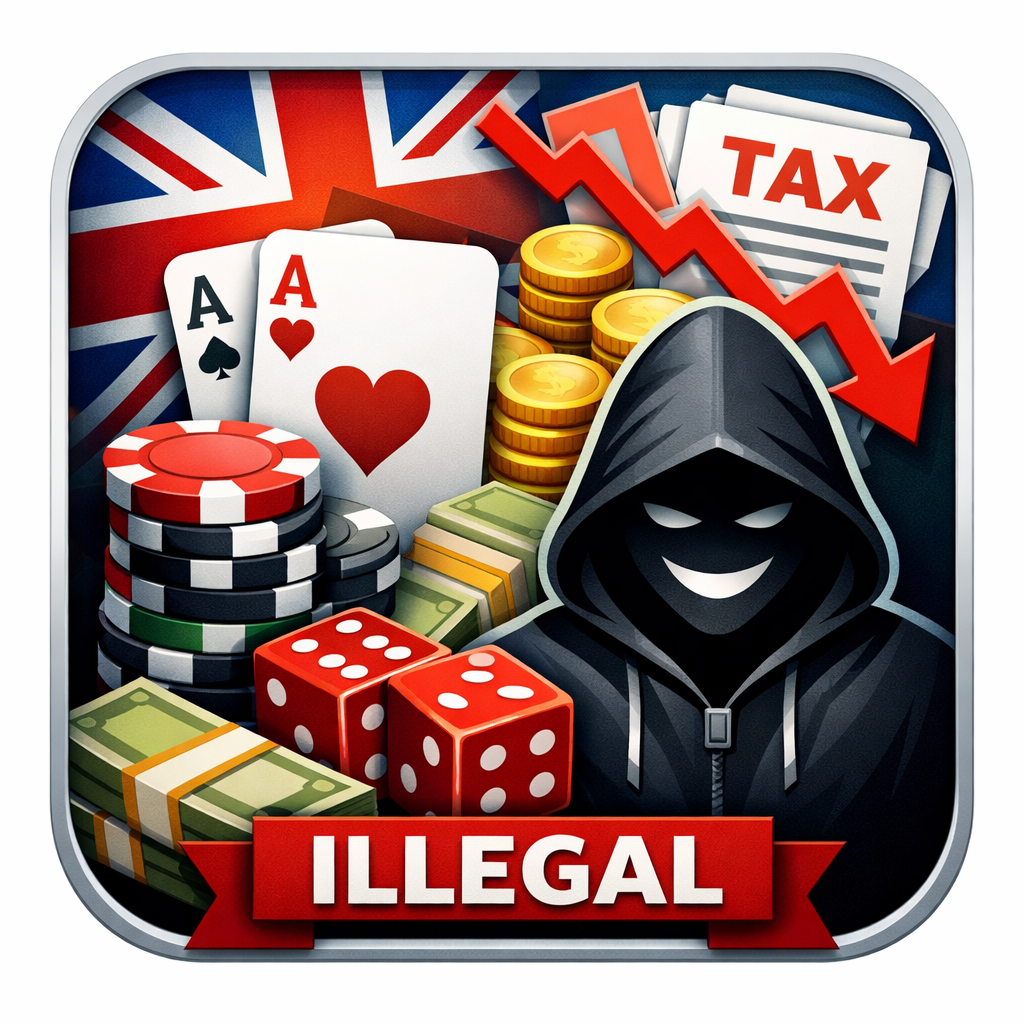
The Chancellor’s latest Budget is being framed as a responsible fiscal move, but in the UK gambling sector, it is increasingly viewed as a dangerous miscalculation. By sharply increasing gambling taxes, the Government risks driving thousands of punters away from regulated operators and straight into the illegal black market, the very place where consumer protections do not exist.
This is not speculation. It is a predictable outcome of making legal betting more expensive while illegal operators remain untaxed, unregulated and aggressively competitive.
Higher Taxes Don’t Change Demand, They Change Where People Bet
People will not suddenly stop betting because gambling duties rise. What will change is where they place their bets.
Licensed operators already operate under one of the most tightly regulated gambling frameworks in the world. They carry the cost of affordability checks, safer gambling tools, anti-money laundering controls and extensive compliance requirements. The new Budget adds another heavy layer of taxation on top.
When regulated operators are forced to offer worse odds, fewer promotions, and tighter limits, punters receive a clear signal: better value exists elsewhere. The black market does not play by the rules, and it does not have to.
Even the UK Government Accepts the Risk
Crucially, this warning does not come only from the industry. The Government’s own forecaster, the Office for Budget Responsibility, has acknowledged that higher gambling taxes will change consumer behaviour, with activity expected to shift away from the regulated market.
The result? Lower tax receipts, not higher ones. The OBR projects that expected revenues will fall by around a third over the coming years as players move offshore, creating an estimated £500 million hole in tax income next year alone.
If the policy relies on people continuing to bet legally at a higher cost, it is already built on a flawed assumption.
A Gift to Criminal Operators
Independent modelling from EY suggests the scale of the problem could be enormous. More than £6 billion in betting and gaming stakes could be diverted to illegal operators, expanding the black market by around 140 per cent.
That money does not support UK jobs, fund British sport or contribute a penny in tax. It goes to criminal networks operating beyond any regulatory oversight. No age checks. No safer gambling tools. No protection for players if something goes wrong.
This is the trade-off the Budget creates: less activity in a regulated system designed to protect consumers, and more in a shadow market that exists solely to extract money without responsibility.
Jobs, Investment and Player Safety at Risk
The regulated gambling sector supports over 100,000 jobs in the UK and contributes billions to the economy every year. As margins tighten, operators will be forced to cut costs, reduce investment and reconsider their UK footprint.
At the same time, players pushed towards illegal sites will lose access to protections that policymakers have spent years strengthening. Affordability checks and safer gambling tools only work if people remain in the regulated market. Drive them out, and those safeguards become meaningless.
The Policy Contradiction at the Heart of the Budget
The Government says it wants to protect consumers and reduce harm. But a tax policy that weakens regulated betting while leaving the black market untouched does the opposite.
Other countries have already learned this lesson the hard way. In markets where gambling taxes rise too far or too fast, unlicensed operators fill the gap. Once consumers are lost to the black market, they are notoriously difficult to bring back.
A Warning That Should Not Be Ignored
The UK gambling framework has long been held up as a global example of how regulation, taxation and consumer protection can coexist. That balance is now under serious threat.
If the Chancellor’s Budget goes ahead unchanged, it may not be the Treasury that benefits most, but illegal operators who thrive when regulation becomes too expensive to compete with.
The Government still has time to reconsider. But ignoring the warning signs risks handing the future of UK gambling to the black market.